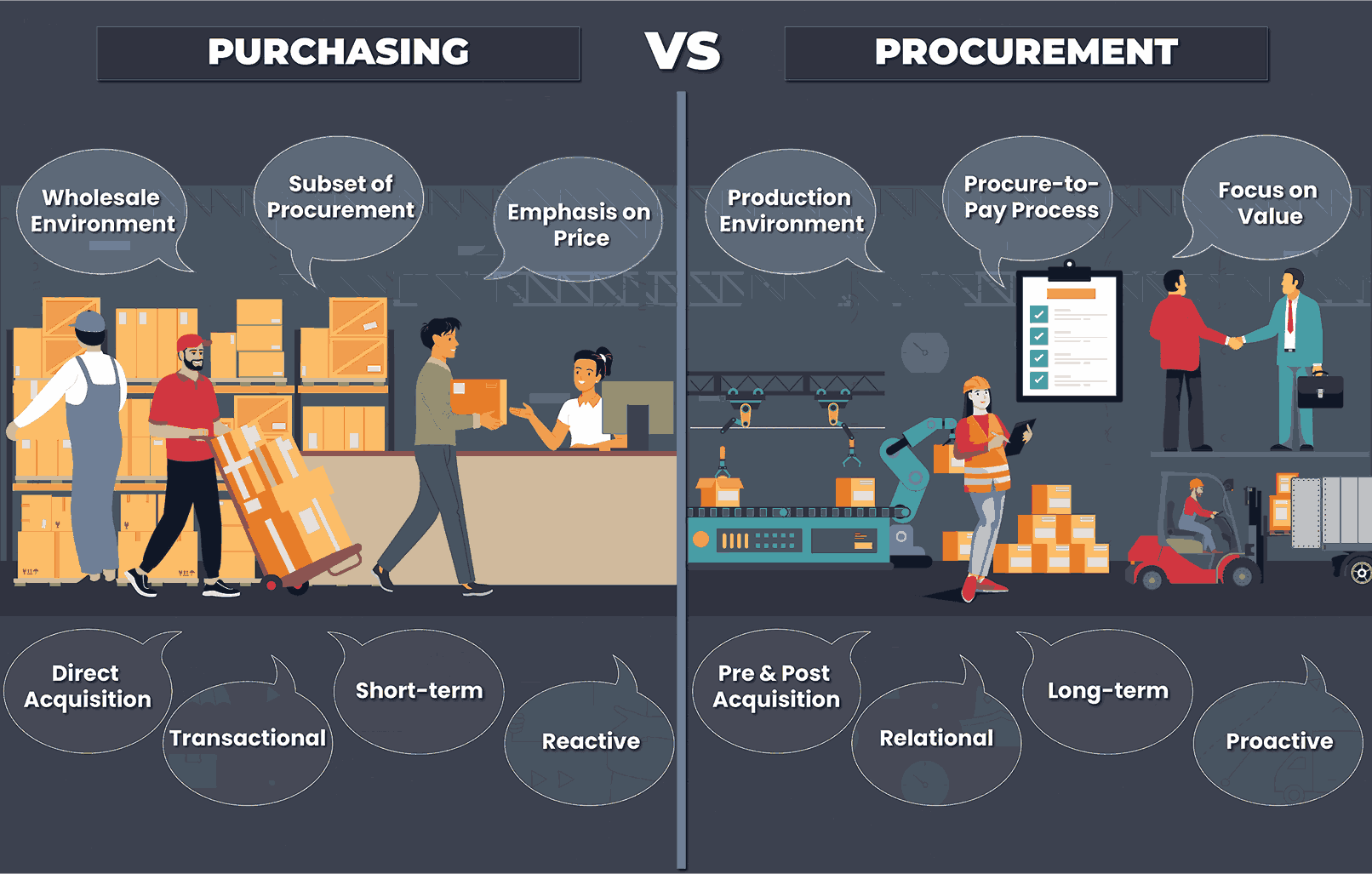
Many people use the terms procurement and purchasing interchangeably. While they are closely related, they represent different stages of acquiring goods and services for an organization.
Procurement is a strategic business function that covers the entire sourcing process—from identifying a business need to selecting suppliers, negotiating contracts, managing supplier relationships, and evaluating supplier performance.
Purchasing, on the other hand, is a transactional activity that focuses on placing orders, receiving goods, and making payments.
Understanding the distinction between procurement and purchasing helps organizations improve cost control, supplier relationships, operational efficiency, and long-term business value.
What is Procurement?
Procurement is the end-to-end process of acquiring goods and services required by an organization. It focuses on creating long-term value by selecting the right suppliers, negotiating favorable contracts, managing risks, and ensuring consistent supply.Procurement is considered a strategic function because its decisions directly influence an organization’s profitability, quality, and competitiveness.
What is Purchasing?
Purchasing is a subset of procurement. Purchasing focuses on executing transactions efficiently and accurately. Its primary objective is to buy goods or services from approved suppliers at the right time, quantity, quality, and price.
Procurement vs Purchasing
| Procurement | Purchasing |
|---|---|
| Strategic process | Transactional process |
| Covers the complete sourcing cycle | Focuses only on buying |
| Long-term supplier relationships | Short-term purchasing activities |
| Includes supplier evaluation and negotiation | Includes purchase orders and payments |
| Creates long-term business value | Ensures timely product availability |
| Broader business function | Part of procurement |
Procurement Process
A typical procurement process consists of the following stages:
- Identify the business need.
- Define product or service specifications.
- Conduct supplier research.
- Request quotations or proposals.
- Evaluate suppliers.
- Negotiate pricing and contract terms.
- Award the contract.
- Issue purchase orders.
- Receive goods or services.
- Evaluate supplier performance.
Purchasing Process
The purchasing process is generally shorter:
- Receive purchase request.
- Select an approved supplier.
- Issue Purchase Order (PO).
- Receive goods.
- Verify invoice.
- Process payment.
Why is Procurement More Strategic?
Effective procurement helps organizations:
- Reduce procurement costs
- Improve supplier relationships
- Minimize supply risks
- Ensure product quality
- Support sustainability initiatives
- Improve operational efficiency
- Increase profitability
Purchasing supports these objectives by ensuring that transactions are completed accurately and on time.
Real-World Example
Imagine a manufacturing company needs steel.
Procurement Team
- Identifies the requirement
- Researches steel suppliers
- Negotiates pricing
- Signs a one-year supply agreement
- Evaluates supplier performance
Purchasing Team
- Creates Purchase Orders
- Places monthly orders
- Receives steel deliveries
- Processes supplier invoices
The procurement team builds the supplier relationship, while the purchasing team manages the day-to-day buying activities.
Key Takeaways
- Procurement is broader than purchasing.
- Purchasing is one stage within procurement.
- Procurement focuses on strategy and supplier management.
- Purchasing focuses on transactions and order execution.
- Both functions work together to ensure an efficient supply chain.
Frequently Asked Questions (FAQs)
Is procurement the same as purchasing?
No. Purchasing is one part of procurement. Procurement includes sourcing, supplier selection, negotiation, contract management, and supplier performance evaluation.
Which comes first: procurement or purchasing?
Procurement comes first. Purchasing occurs after suppliers have been selected and contracts have been agreed.
Which department negotiates with suppliers?
Procurement professionals usually negotiate contracts and pricing with suppliers.
Can a small company have only purchasing?
Yes. Small businesses often combine procurement and purchasing responsibilities into a single role.
Conclusion
Although procurement and purchasing are often used interchangeably, they serve different purposes within an organization. Procurement is a strategic function focused on creating long-term value through supplier management and sourcing, while purchasing is the operational process of buying goods and services. Understanding the difference enables businesses to improve efficiency, reduce costs, and build stronger supplier relationships.
Leave a Reply